Subterranean termite treatment stops destructive colonies that emerge from Bexar County's dense clay soils. San Antonio sits directly within the very heavy subterranean termite infestation zone, where species like…
Subterranean termite treatment stops destructive colonies that emerge from Bexar County's dense clay soils. San Antonio sits directly within the very heavy subterranean termite infestation zone, where species like Reticulitermes flavipes feed constantly on damp cellulose framing. Historic pier-and-beam properties throughout Monte Vista and King William present elevated risks because ground clearance beneath subfloors often measures under 18 inches, allowing mud tubes to bypass visible stem walls undetected. Conversely, modern monolithic slabs common across Stone Oak, Timberwood Park, and The Dominion encounter pressure along perimeter expansion joints, plumbing penetrations, and exterior weep screeds.
Selecting liquid trenching versus perimeter baiting depends on structural layout and surrounding terrain. Continuous liquid barrier treatments apply non-repellent termiticide four gallons per 10 linear feet into an excavated six-inch by six-inch trench around foundation edges. Foraging workers encounter the undetectable active ingredient, share it throughout the underground nest via contact grooming, and collapse the reproductive queen within 60 to 90 days. For structures built over rocky limestone outcroppings near Helotes Creek or surrounded by decorative flagstone patios in Alamo Heights, bait stations placed at 10-foot intervals offer an effective alternative, utilizing cellulose matrix laced with insect growth regulators. The trade-off centers on physical disruption: liquid barriers deliver faster structural isolation but require trenching and discrete concrete drilling through patios, whereas bait systems leave slabs intact but demand bi-monthly monitoring visits.
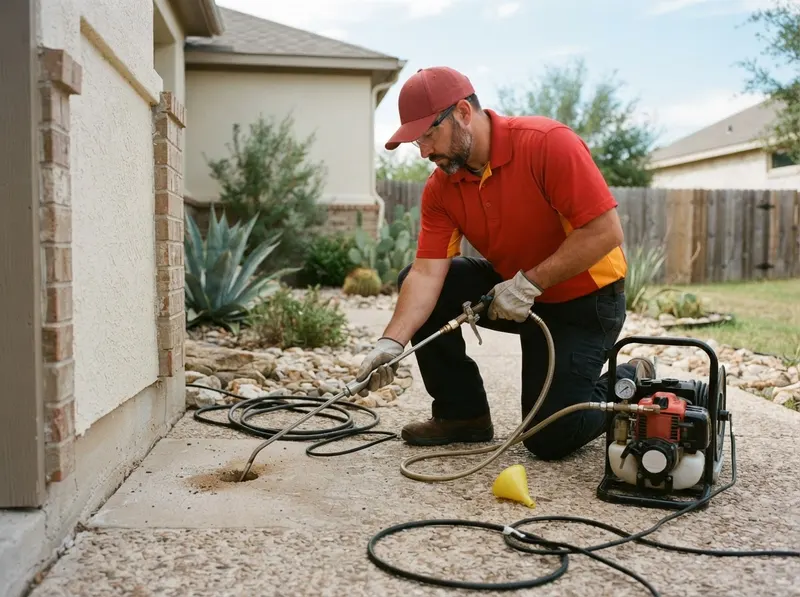
Treatment execution follows specific physical steps. First, the exterior foundation perimeter is measured and cleared of mulch layers. Second, technicians dig a continuous trench directly against the concrete grade beam. Third, horizontal brick-paver or concrete surfaces touching the structure are drilled every 12 inches to inject liquid protection down to the underlying soil grade. Fourth, wall voids with observed interior termite swarmer wings, common near plumbing access panels in Southtown and Medical Center crawlspaces, receive low-moisture expanding foam. Transparent pricing prevents recurring monthly subscription obligations, maintaining honest property defense with zero contract traps.
Every job gets a firm, written price after a free on-site visit.
Tell us about your subterranean termite treatment job in San Antonio and we'll send a clear, written quote, usually the same day.
 Red Barn Pest Control